Spring, Self-Care, and the Art of Acceptance
It is a few weeks’ post-Spring equinox now, and the lilacs are blooming everywhere in my area. It is one of my favorite scents, and I dry as many as I can to use later in flower waters, potpourris, lilac syrup, and ground up for facial scrubs. Spring is a season of growth, renewal, and fresh ideas. Since January, I have been focused on publishing my book and crafting seasonal items.
When you make your own products, you eventually settle into a natural rhythm. I’ve learned to keep a close eye on my supplies; oils and butters usually have expiration dates within a year of opening, while essential oils last longer—typically at least two or three years.
The DIY Journey
I am still sticking to my “DIY and frugal” New Year’s resolution. To stay on track, I make something new every month, whether it’s a simple room spray, my custom face powder, or floral water hair products. However, several iterations of this process have taught me what doesn’t work for me. For instance, I’ve discovered that homemade cleansing balms tend to irritate my skin, and I have to be very careful with oil-based products near my eyes. I’ve also stepped back from using castor oil for my lash growth.
One money-saving DIY I tackled for the first time this year was cutting my own hair! There are so many tutorials available now, and since my hair is thin and fine, there isn’t much of it to manage anyway. I went in with a plan and confidence, and it turned out well.
Embracing Natural Beauty
I have also moved away from traditional hair dyes. Currently, I use a semi-permanent treatment called Overtone about once every six weeks, though I could easily use it every three weeks. It’s a fantastic conditioning color treatment made with natural butters and oils. It has a lovely peppermint scent and a vast color range to choose from. I’m currently using the Chocolate Brown but want to try the Mushroom next since my natural hair color is more ashy, and I’m trying to cancel out the red . The color adds nice dimension to my hair, but it only lasts 2-3 weeks for me.
In between those treatments, I do a coffee rinse every two weeks. Since I have medium brown hair, the coffee adds a punch of richness and helps tone down the leftover red dye at my ends. I’m finally letting my natural medium brown grow out, and I feel a bit sorry for my younger self who disliked it so much. That was largely the influence of my mother, who wanted to be blonde and wanted the same for me. Those Southern California ideals of blonde hair were deeply embedded in my childhood.
For the coffee rinse, I save leftover coffee in the morning. That evening, when I wash my hair, I shampoo first, rinse, squeeze out as much water as I can, pour the coffee all over my hair, and massage it in. Leave it in for the remainder of the shower, add some conditioner to the ends of your hair, and rinse everything out at once. Your hair won’t smell like coffee for long; it dissipates. I don’t mind it, I love coffee. Sometimes I add a couple drops of essential oil, such as peppermint or lavender.
The Season of Acceptance
For me, this spring is about acceptance—of myself and the world around me. I am realizing just how much I’ve been influenced by external sources regarding my appearance. I believe our society has a massive problem with body dysmorphia, rooted in a lack of self-acceptance and the judgment of others.
It’s easy to say, “don’t care what people think,” but putting that into practice is a difficult, constant discipline. We should all be mindful that most people are truly trying their best. I think many women are coming to the same realization lately: society wants to keep us in a mold that is both unnatural and limiting. This season, I’m choosing to break out of it.
Tips for Drying Flowers and Making Floral Water
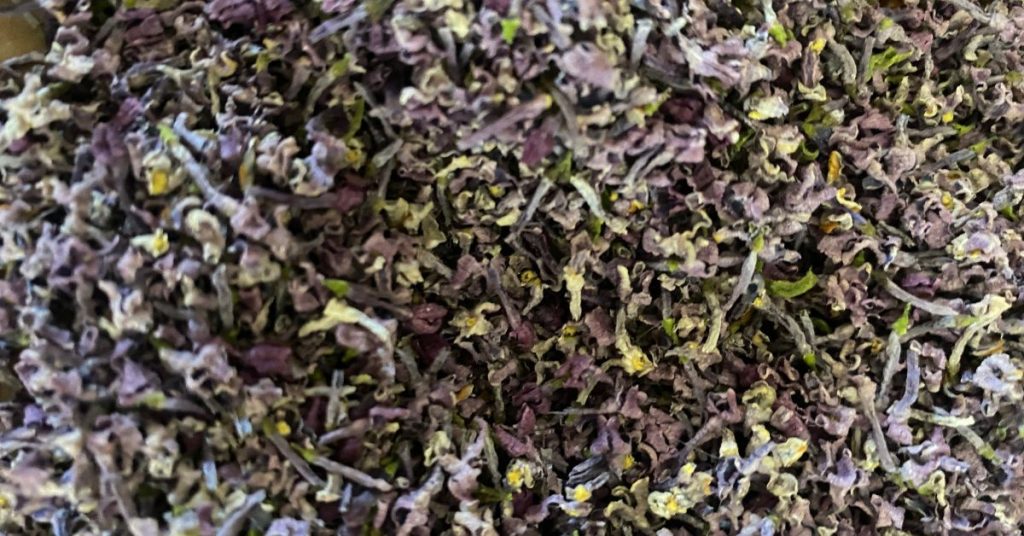
If you are interested in drying flowers and making your own floral water, here are a few essential tips. First, keep in mind that using fresh flowers significantly shortens the shelf life. For the best results, always use dried flowers.
My Process: In the morning, I fill a Mason jar one-third full with dried flowers and fill the rest with distilled water. I leave it outside in the sun for the day, then bring it in at night to strain through a cheesecloth.
The Truth About Shelf Life: There is a common misconception online that you can simply leave homemade floral water on your counter for weeks. In reality, bacteria grows extremely quickly in water-based botanical infusions. Even when refrigerated, unpreserved floral water will rarely last longer than 3 to 5 days before becoming a breeding ground for microbes. On the counter, it can spoil in as little as 24 hours.
Using Preservatives: If you want your floral water to remain safe for several months, you must use a preservative like Geogard ECT or Optiphen Plus. I am currently using Optiphen Plus, though I plan to switch to Geogard soon, as it is often more effective for purely water-based products.
-
- Usage Rates: Most broad-spectrum preservatives should be used at a concentration of 0.5% to 1% of the total weight of your formula. For example, if you have 100g of floral water, you would add 1g of preservative.
-
- Storage: Once the preservative is added, your floral water can last 3 to 6 months. Even with a preservative, I recommend storing it in a spray bottle in the refrigerator. This extra step provides a cooling sensation upon application and serves as an added layer of protection against bacterial growth.
It is always best to work in small batches. This ensures your ingredients stay fresh and you don’t end up with more than you can realistically use.
Once my floral water is prepared and preserved, I like to split it between a glass jar and a spray bottle, storing both in the refrigerator. I keep a portion in the jar to use as a base for my DIY clay masks and sheet masks—it adds a lovely botanical boost that you just don’t get from plain water. The rest goes into a spray bottle, which I use as a refreshing facial toner and a natural setting spray.
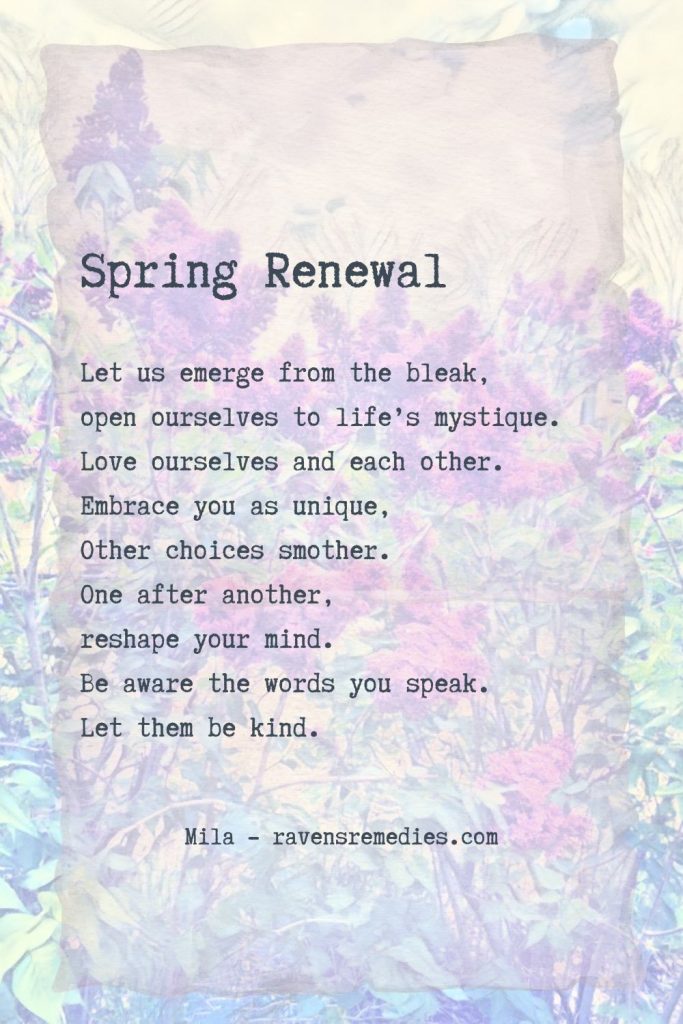
Enjoy this poem I wrote for the Spring Season.