
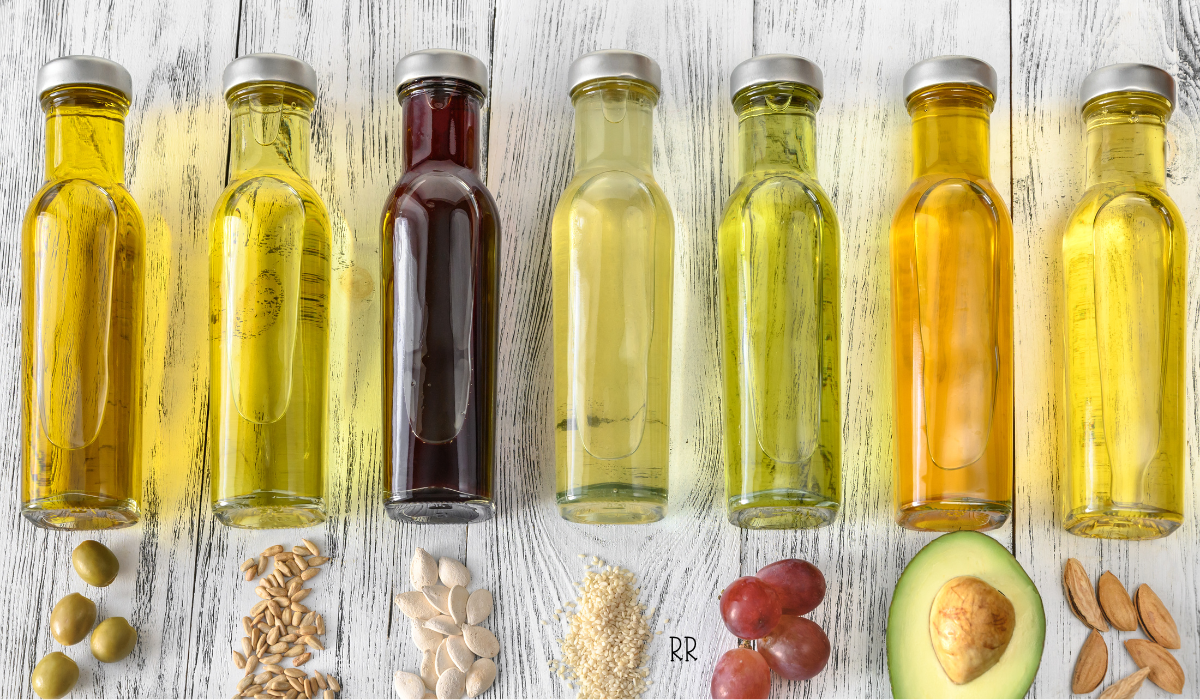
Oils are an essential ingredient in creating your own natural beauty products. They also offer a wealth of benefits for skin, hair, and body. At the beginning of your DIY natural beauty journey, there can be overwhelming information and a variety of oils to choose from. Understanding the difference between wet and dry oils, and which ones are comedogenic (pore-clogging), can significantly enhance your DIY creations and unlock their full potential.
What’s the Difference?
- Wet Oils: These oils have a high oleic acid content, making them feel “wet” or slightly greasy on the skin. They tend to be more deeply penetrating and moisturizing, suitable for dry or mature skin. Beware they can clog pores on some skin, so experiment and see what works for you.
- Examples:
- Comedogenic: Coconut oil, castor oil (These oils have a high molecular weight, which can clog pores in some individuals.)
- Less Comedogenic: Olive oil, avocado oil, almond oil, hemp seed oil, apricot kernel oil
- Examples:
- Dry Oils: Rich in linoleic acid, these oils are quickly absorbed, leaving a non-greasy, silky finish. They’re ideal for oily or acne-prone skin, as well as hair care.
- Examples: Jojoba oil, grapeseed oil, rosehip oil, evening primrose oil, argan oil, sunflower oil, maracuja oil, pumpkin seed oil (low-comedogenic)
Choosing the Right Oil for Your Hair and Skin Type
- For Dry Skin: Look for oils rich in oleic acid, such as olive oil, avocado oil, and almond oil. These will deeply hydrate and nourish dry, flaky skin.
- For Oily Skin: Choose dry oils like jojoba oil, grapeseed oil, and argan oil, which won’t clog pores and can help regulate sebum production.
- For Acne-Prone Skin: Jojoba oil, rosehip oil, and pumpkin seed oil can help combat breakouts.
- For Sensitive Skin: Look for gentle, non-comedogenic oils like jojoba oil, rosehip oil, and pumpkin seed oil.
- For Mature Skin: Oils rich in antioxidants like rosehip oil, argan oil, and maracuja oil help improve skin elasticity and reduce the appearance of fine lines and wrinkles.
- For All Skin Types:
- Jojoba oil: Mimics sebum, making it suitable for all skin types.
- Argan oil: A versatile oil that nourishes, hydrates, and protects all skin types.
- Rosehip oil: Rich in antioxidants and vitamins, beneficial for most skin types.

- For Dry Hair: Coconut oil, castor oil, and olive oil can deeply condition and add shine to dry, damaged hair.
- For Oily Hair: Jojoba oil and argan oil can help control oil production and add shine without weighing hair down.
- For Fine Hair: Lightweight oils like jojoba, argan, and grapeseed oils can add shine and nourishment without weighing hair down.
- For Frizzy Hair: Argan oil, grapeseed oil, and jojoba oil can tame frizz and add smoothness.

DIY Beauty with Wet and Dry Oils
- Face Oils:
- For Dry Skin: Blend a few drops of rosehip oil (dry) with almond oil (wet) for a nourishing night serum.
- For Oily Skin: Combine jojoba oil (dry) with a few drops of rosehip oil (dry) for a lightweight moisturizer.
- For Mature Skin: Blend maracuja oil (dry) with rosehip oil (dry) for an antioxidant-rich serum to combat signs of aging.
- For All Skin Types: Apply a few drops of jojoba oil (dry) alone or mixed with other oils for a lightweight, hydrating boost.
- Hair Oils:
- For Dry Hair: Mix coconut oil (wet) with castor oil (wet) for a deeply conditioning hair mask.
- For Frizz: Apply a few drops of argan oil (dry) to damp hair to tame frizz and add shine.
- Body Oils:
- For Moisturizing: Blend grapeseed oil (dry) with apricot kernel oil (wet) for a luxurious body oil.
- For Massage: Combine almond oil (wet) with lavender essential oil for a relaxing massage oil.

Tips for Choosing the Right Oil
- Consider your skin type: Select oils that suit your specific needs.
- Patch test: Always test any new oil on a small area of skin before applying it more widely.
- Quality matters: Choose high-quality, cold-pressed oils for the best results.
- Be mindful of comedogenicity: If you have acne-prone skin, avoid using highly comedogenic oils like coconut oil and castor oil.
My skin is dry, on the sensitive side, and maturing. Right now, I am using a simple blend of rose, vanilla, and lilac-infused almond oil, and rosehip oil. I rotate the oils I use depending on the time of year, what I have on hand, and what my skin needs. I use wet oil in the winter versus dry oil in the summer.
Incorporating wet and dry oils into your DIY beauty routine allows you to harness the power of nature to create personalized and effective products. Experiment with different combinations to discover the perfect blend for your unique needs.
Disclaimer: This information is for general knowledge and informational purposes only and does not constitute medical advice. I’d love to hear about your favorite DIY oil blends! Share your creations in the comments below.


