Celebrating Ostara
As we see the sun begin to peek out, and temperatures increasing, we know spring is around the corner. For Wiccans, this time is marked by Ostara, the spring equinox sabbat And the beginning of the Wicca New Year. Ostara is named after the German Virgin Goddess of Spring. This sabbat celebrates fertility, love, and the return of light. It’s a season abuzz with new life, a potent reminder that after dormancy, comes vibrant renewal. Imagine a blossoming flower pushing through soil, a metaphor for the opening of possibilities and the power of beginnings. Ostara is also a celebration of balance, as day and night come into equal harmony.
Crystals and Plants for the Season
Aquamarine, with its calming sea blues, reflects the tranquility of spring. Rose quartz, the stone of love, resonates with the season’s emphasis on new beginnings and partnerships. Moonstone, shimmering with lunar energy, connects us to the cyclical nature of life, death, and rebirth.
Embrace the verdant world with jasmine’s intoxicating fragrance, ginger’s invigorating warmth, and Irish moss’s tenacious life force. With its stimulating properties, dandelion tea, a bitter detoxifier, and ginger essential oil, cleanse and energize for the season ahead.
Spring Scents
As the earth awakens from its slumber, so does the world of fragrance. Fill your home with the delicate floral scents that embody the spirit of Ostara. Jasmine, with its intoxicating aroma, is a natural aphrodisiac, perfect for igniting the energies of love and new beginnings. Rose, the quintessential flower of love, adds a touch of romance to the air. Embrace all sweet scents this season – they represent the blossoming of life and the promise of joyful times to come.
Symbols of Renewal
Eggs, a universal symbol of fertility, take center stage at Ostara. Dye them using natural herbs and spices – the colors themselves hold meaning. Robin’s egg blue signifies new beginnings, while vibrant yellows and pinks represent the sun’s warmth and the blossoming of love. Butterflies, emerging from cocoons, represent transformation, and honey, a symbol of perfect balance, can be used to create Honegar, a delicious and restorative tonic (see “Sabbats” for the recipe on page 119).
Invoking Dieties
Ostara is a time to connect with deities associated with love, fertility, and new beginnings. Celebrate all moon goddesses, virgins representing purity and potential, and those embodying love – Aphrodite, Athena, Gaia, and Isis. The muses, inspiring creativity, Persephone, returning from the underworld, and Venus, the Roman goddess of love, are all welcome at the Ostara altar.
For the masculine aspect, consider the youthful charm of Adonis, Odin’s wisdom and guidance, Pan’s connection to the wild, and Osiris, the Egyptian god of agriculture and rebirth.
Activities to Welcome Spring
Plant an herb garden, nurturing new life from the earth. Get crafty! Dye eggs using colorful concoctions brewed from plants as seen below. Let the colors be your guide – research the symbolic meaning behind each hue to personalize your creations.
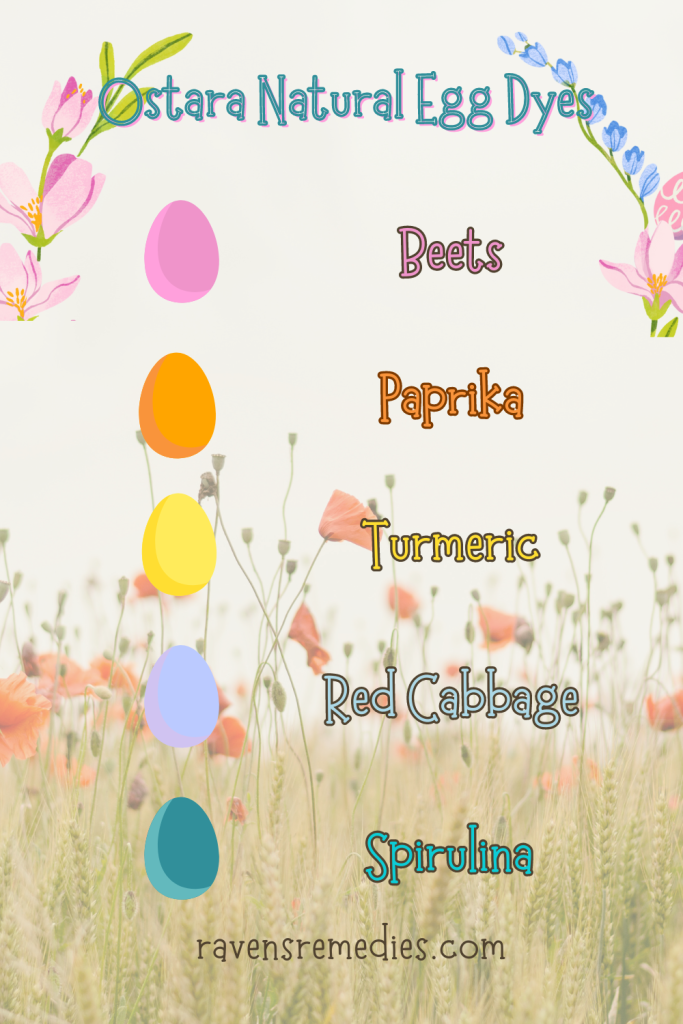
Natural Easter Egg Dyes Recipe
Ingredients:
- Eggs (white eggs recommended for brighter colors)
- White vinegar
- Water
- For red/purple:
- Beets
- For orange/red:
- Paprika
- For yellow:
- Turmeric powder
- For blue/purple:
- Red cabbage
- For teal/green:
- Spirulina powder
Instructions:
- Prepare the Eggs: Hard boil your eggs according to your preferred method. Once cooked, rinse them with cold water and let them cool completely.
- Make the Dye Baths:
- For each color, you’ll need:
- 2 cups water
- 1 tablespoon chosen ingredient (beets, paprika, turmeric, etc.)
- 1 teaspoon white vinegar
- For beets: Roughly chop the beets and simmer them in the water-vinegar mixture for 20-30 minutes. Strain the liquid into a jar or bowl, discarding the beets.
- For paprika, turmeric, and spirulina: Simply whisk the chosen ingredient into the water-vinegar mixture until well combined.
- For red cabbage: Shred the cabbage finely. Simmer the cabbage in the water-vinegar mixture for 20-30 minutes. Strain the liquid into a jar or bowl, discarding the cabbage.
- For each color, you’ll need:
- Dyeing the Eggs:
- Pour each dye bath into a separate shallow container (mugs, bowls, etc.) large enough to hold an egg.
- Add a splash of white vinegar to each container (about 1/2 teaspoon). This helps the color adhere to the eggs.
- Gently place a cooled egg into each dye bath. The longer you leave the egg in the dye, the more vibrant the color will be.
- Aim for 30 minutes to a few hours for deep colors.
- Drying the Eggs:
- Once you’ve achieved the desired color, carefully remove the eggs from the dye baths and place them on a wire rack to dry completely.
Tips:
- Wear gloves while handling the beet dye, as it can stain.
- Experiment with different soaking times to achieve various color shades.
- For patterned eggs, use rubber bands to create sections on the eggs before dyeing.
- After drying, you can buff the eggs with a paper towel or cloth for a nice shine.